Signs You Need Concrete Repair Before Winter
Catch concrete problems before Iowa winter makes them worse. Learn the warning signs that your driveway or patio needs repair.
Quick Answer: What are the signs concrete needs repair before winter?
The seven warning signs your concrete needs repair before Iowa winter are: cracks wider than a credit card, surface scaling or flaking, sunken or uneven slabs, pitting or pop-outs, cracks near drains or foundations, crumbling step edges, and pooling water on the surface. Catch these in October — repair costs typically multiply 3–10x after one freeze-thaw season.
Signs Your Concrete Needs Repair Before Winter
Iowa winters are brutal on concrete. The constant freeze-thaw cycles, road salt, and heavy snow loads can turn minor concrete problems into major—and expensive—repairs.
The good news? Catching issues before winter can save you money and extend the life of your driveway, patio, or walkway. Here's what to look for.
Why Winter Makes Concrete Problems Worse
Before we cover the warning signs, understand why fall repair is so important:
The Freeze-Thaw Cycle
- Water enters cracks and pores in concrete
- Water freezes and expands (by about 9%)
- Expansion forces cracks wider
- Ice melts, water penetrates deeper
- Cycle repeats 100+ times per Iowa winter
Each cycle makes existing damage progressively worse.
Salt and Deicers
Chemical deicers:
- Accelerate surface deterioration
- Can cause scaling and spalling
- Penetrate existing cracks
- React with concrete over time
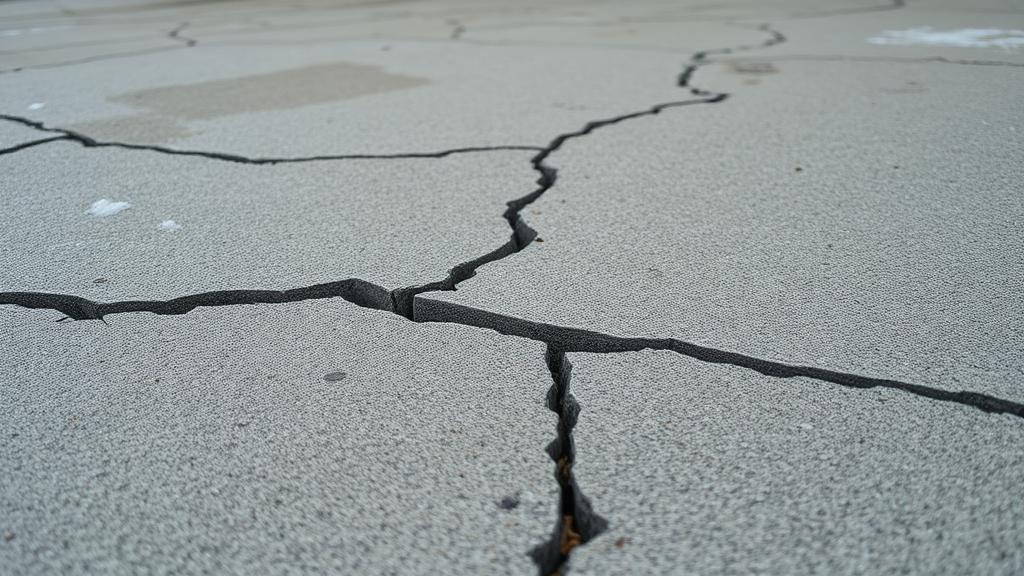
Warning Sign #1: Cracks
Not all cracks are equal. Here's how to assess yours:
Hairline Cracks (Less than 1/8 inch)
Severity: Low to Moderate
What it means: Normal settling or shrinkage. Common in older concrete.
Action needed: Seal before winter to prevent water infiltration. Simple caulk-style crack fillers work well.
Medium Cracks (1/8 to 1/2 inch)
Severity: Moderate
What it means: More significant movement or stress. Could indicate underlying issues.
Action needed: Professional evaluation recommended. May need routing and sealing or more extensive repair.
Large Cracks (Over 1/2 inch)
Severity: High
What it means: Significant structural movement, failed joints, or base problems.
Action needed: Professional repair required. May need section replacement.
Pattern Cracking (Map Cracking)
Severity: Moderate to High
What it means: Often indicates:
- Improper curing when originally poured
- Alkali-silica reaction
- Excessive water in original mix
Action needed: Surface may need resurfacing or replacement depending on severity.
Warning Sign #2: Spalling and Flaking
Spalling occurs when the surface layer of concrete flakes, peels, or pits away.
What Causes Spalling
- Freeze-thaw damage
- Deicing chemical damage
- Poor original finishing (weak surface layer)
- Inadequate air entrainment in the concrete mix
Severity Assessment
Light spalling: Small pits or surface roughness
- Action: May be addressed with resurfacing
Severe spalling: Large areas of exposed aggregate, deep pits
- Action: Often requires section replacement
Why Fall Repair Matters
Exposed spalled areas allow significantly more water penetration, accelerating winter damage exponentially.
Warning Sign #3: Settling and Heaving
Sinking Concrete
Signs of settling:
- Sections lower than adjacent concrete
- Pooling water on surface
- Uneven joints between slabs
- Gaps under concrete edges
Causes:
- Soil erosion beneath slab
- Improper original compaction
- Tree root decay
- Water damage to base
Solution options:
- Mudjacking or foam lifting
- Section replacement
- Full replacement if widespread
Heaving Concrete
Signs of heaving:
- Raised sections or edges
- Cracked and lifted slab corners
- Uneven surfaces
Causes:
- Frost heave (common in Iowa)
- Tree root growth
- Expansive soils
- Poor drainage
Action needed: Address drainage issues. May need to remove and replace with proper base.
Warning Sign #4: Surface Deterioration
Dusting
A dusty, chalky surface indicates:
- Weak surface layer
- Excessive water in original mix
- Poor curing
- Freeze-thaw damage
Action: Dusting surfaces need sealing or resurfacing to prevent further degradation.
Scaling
Thin layers of surface peeling away, often caused by:
- Deicing salts
- Improper finishing
- Freeze-thaw cycles
Action: Light scaling can be resurfaced. Severe scaling may require replacement.
Discoloration
While primarily cosmetic, discoloration can indicate:
- Moisture issues
- Mold or mildew growth
- Chemical staining
Action: Clean and seal. Address any underlying drainage problems.
Warning Sign #5: Drainage Issues
Poor drainage accelerates all other problems. Look for:
- Standing water on surface after rain
- Water pooling against foundation
- Erosion channels near edges
- Water stains on adjacent walls
Action needed: May require:
- Regrading
- Adding drain channels
- Slab replacement with proper slope
When to Repair vs. Replace
Consider Repair If:
- Damage is localized to specific areas
- Cracks are primarily surface-level
- Concrete is less than 10-15 years old
- Overall structure is sound
- Budget is limited but some action is needed
Consider Replacement If:
- Multiple types of damage present
- Widespread cracking throughout
- Significant settling or heaving
- Concrete is 20+ years old
- Previous repairs have failed
- Drainage problems are fundamental
DIY vs. Professional Repair
DIY-Appropriate Repairs
- Hairline crack filling with caulk
- Small spall patching
- Concrete sealing
- Minor cosmetic repairs
Professional Repairs Needed
- Cracks larger than 1/4 inch
- Structural concerns
- Settling or heaving issues
- Widespread damage
- Anything affecting drainage
Act Before the First Freeze
Iowa typically experiences its first hard freeze in late October. For repairs to properly cure:
Schedule concrete repairs by early October
This allows:
- Time for repairs to fully cure
- Sealers to properly bond
- Adjustments if issues arise
- Completion before weather turns
Our Pre-Winter Inspection
Not sure about the condition of your concrete? We offer pre-winter assessments to:
- Evaluate current damage
- Identify at-risk areas
- Recommend appropriate repairs
- Provide accurate cost estimates
Don't Wait Until Spring
Damage that seems minor in fall can become a major expense by spring. A $200 crack repair in October could prevent a $5,000 replacement in April.
Contact Des Moines Concrete Companies for a free pre-winter assessment of your concrete.
Why Iowa Winters Are So Hard on Concrete
Central Iowa averages 70+ freeze-thaw cycles per year — far above the national average. Each cycle, water seeps into hairline cracks, freezes overnight, expands by about 9%, and pries the crack wider. Repeat that 70 times a season, add deicing salt that accelerates surface scaling, and small cosmetic problems become structural ones in a single winter. Catching them in October or early November — before the first hard freeze — is the single best maintenance habit a Des Moines homeowner can build.
7 Warning Signs You Should Repair Before Winter
1. Hairline Cracks Wider Than a Credit Card
Any crack you can fit a credit card edge into is wide enough to hold water. Once that water freezes, the crack will grow. Seal cracks now (DIY or pro) before they double in size.
2. Surface Scaling or Flaking ("Spalling")
If the top layer is flaking off in patches, the surface paste is failing — usually from deicing salt, a poor mix, or a too-dry cure. Without resurfacing, the affected area will grow each winter. Our resurfacing cost guide covers what this typically runs in Des Moines.
3. Sunken or Uneven Slabs
If your driveway, sidewalk, or patio has dropped a half-inch or more in any section, the base underneath has eroded or settled. Snow piling on a tilted slab adds weight, accelerates damage, and creates ice dams. Mudjacking is usually a same-day fix.
4. Pitting or Pop-Outs
Small craters or "pop-outs" mean aggregate near the surface is reacting with moisture and salt. Once started, pitting expands rapidly during freeze-thaw season. Apply a penetrating sealer or schedule resurfacing before snow arrives.
5. Cracks Around Drains, Steps, or Foundation Edges
These transition zones are where water collects. A crack near your foundation can route meltwater straight against your basement wall, leading to interior leaks within weeks. See our foundation crack repair guide.
6. Crumbling Step Edges or Corners
Concrete steps take more weather punishment than any other surface — water pools on tread surfaces, salt sits in corners, and shovel impact chips the edges. A small chip in October becomes a missing chunk by March.
7. Pooling Water Anywhere on the Slab
Standing water means the slab has settled, the slope is wrong, or there's a low spot that wasn't finished correctly. In summer it's annoying. In winter it's an ice rink and a freeze-thaw multiplier.
What Repairs Are Possible in Late Fall?
Iowa weather is forgiving until about mid-November. Until then, most repairs are still on the table:
- Crack sealing — works down to about 40°F
- Concrete leveling / mudjacking — works as long as ground isn't frozen
- Penetrating sealers — most rated above 50°F surface temp
- Resurfacing overlays — need 50°F+ for 24–48 hours; typically not viable past early November
- Full replacement — needs cold-weather methods (heated mix, blankets) once nighttime temps drop below 40°F; expect 20–40% premium
If you're seeing two or more warning signs, schedule the assessment now — most repairs become impossible (or much more expensive) once the ground freezes.
Cost of Waiting vs. Cost of Acting Now
Real example pricing for the same problem caught at different stages:
| Issue Caught Early (October) | Cost | Same Issue Spring After Winter | Cost | |---|---|---|---| | Hairline cracks (5 ft) | $80–$200 | Same cracks now ½" wide + spalling | $1,500+ resurface | | One sunken sidewalk panel | $300–$600 mudjack | Multiple cracked panels | $2,000+ replace | | Surface pitting (small area) | $250 sealer | Full surface scaling | $3,000+ resurface | | Step corner chip | $150 patch | Crumbling step | $800+ rebuild |
Waiting one winter often multiplies the cost 3–10x.
DIY vs. Professional: What's Realistic?
Some pre-winter repairs are reasonable DIY projects:
- Sealing hairline cracks with concrete caulk
- Applying a penetrating sealer to a clean slab
- Filling small pop-outs with patching compound
These are not DIY-friendly:
- Mudjacking or slab leveling
- Resurfacing overlays
- Step rebuilding
- Anything involving structural cracks or near foundation walls
If you're not sure where the line is, ask a pro for an assessment — most reputable Des Moines concrete contractors will tell you honestly when DIY is fine.
Pre-Winter Maintenance Checklist
Before the first hard freeze:
- Walk every slab and look for cracks, scaling, settlement, pop-outs
- Photograph anything questionable for reference
- Clean expansion joints — remove leaves, dirt, plant material
- Re-caulk gaps between concrete and house, garage, or steps
- Apply or refresh a penetrating sealer on driveways and patios
- Avoid using deicing salt on concrete less than 6 months old
- Plan to use sand for traction the first winter after any new pour
When to Call a Professional
Get a pro assessment if you see cracks wider than ¼ inch, sections that have moved, any cracking near foundation walls, spalling covering more than 10% of a surface, or steps with crumbling edges. Most Des Moines contractors provide free in-person assessments in October and November. Request a free quote — we'll tell you what needs immediate attention vs. what can safely wait.
Prices shown are typical planning ranges for budgeting, not quotes. Actual pricing varies by project and depends on size, concrete thickness, site access, demolition/removal, base preparation, reinforcement, drainage, decorative finish, material requirements, labor and project complexity.
Des Moines Concrete Companies
Verified ExpertProfessional Concrete Contractors
Work is performed by licensed, insured and bonded contractors with 20+ years of industry experience, specializing in all types of residential and commercial concrete work.
Ready to Start Your Concrete Project?
Get a free, no-obligation quote from Des Moines's trusted concrete professionals.